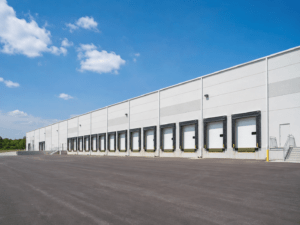
If you own a warehouse, distribution center, flex building, or manufacturing facility in Houston and want to know what it is worth, a broker opinion of value (BOV), also called a broker price opinion, gives you a professional, market-based answer without the cost or timeline of a formal appraisal. A BOV is prepared by a licensed commercial real estate broker using current Houston comparable sales, active market data, and property-specific analysis. Most are completed within 2 to 3 business days. For owners considering a sale, it is typically provided at no charge.
How Houston Industrial Property Gets Valued
Industrial property valuation in Houston relies on three inputs: what comparable buildings have sold for recently, what the property would generate as an income-producing asset, and what it would cost to replace the improvements at today’s construction costs. For most warehouses, distribution centers, and owner-occupied industrial facilities, the sales comparison and income approaches carry the most weight. Houston’s 871 million square feet of total industrial inventory across 30 submarkets means submarket location and product type can produce dramatically different valuations for buildings with similar square footage.
Key property-specific factors that affect value include:
- Total square footage and clear height
- Number and type of loading doors: dock-high, grade-level, or drive-in
- Power capacity and electrical service
- Submarket location: Northwest, North, Southwest, South, or Port corridors
- Proximity to Port Houston, I-10, I-45, I-69, and Beltway 8
- Lease status, tenant credit quality, and remaining lease term
- Building age, condition, and whether it is modern Class A or older commodity space
- Outdoor storage or IOS-capable yard space
- Manufacturing versus warehouse and distribution use type
Houston industrial investment sales averaged $185 per square foot at a 7.0% average cap rate in Q1 2026 according to Partners Real Estate’s Houston Industrial Q1 2026 Market Report, with well-located stabilized assets in Port corridors and tight logistics submarkets trading materially tighter. A BOV from a broker with active Houston deal flow applies the correct submarket comp set and cap rate for your specific building type rather than a metro-wide average.
When Houston Industrial Owners Request a BOV
Most requests come from owners in one of these situations. Knowing which one applies shapes how the BOV is structured and what documentation may be needed.
- Preparing to sell and need a realistic pricing range before listing or interviewing brokers
- Estate planning or probate requiring documented market value of a commercial asset
- Partnership dispute or buyout where an independent opinion is needed by both parties
- Refinancing and need supporting value documentation for a lender
- Property tax appeal contesting a Harris, Fort Bend, Montgomery, or Brazoria County appraisal district assessment
- Sale leaseback evaluation to unlock equity while maintaining operational control
- 1031 exchange planning where knowing current value determines what replacement property makes sense
- Evaluating whether to sell into the current market or hold through the new supply absorption cycle
A BOV is not a certified appraisal, but for most of these situations it provides everything needed at a fraction of the cost and turnaround time. If your situation requires a USPAP-compliant certified appraisal, such as an SBA loan or formal litigation, a broker can help you determine the right path before you spend money on the wrong document.
BOV vs. Certified Appraisal for Houston Industrial Property
Here is how the two valuation tools compare for a Houston industrial owner:
| Broker Opinion of Value | Certified Appraisal | |
|---|---|---|
| Prepared by | Licensed CRE broker | Certified MAI appraiser |
| Turnaround | 2 to 3 business days | 2 to 4 weeks |
| Cost | Lower, often free for sale prep | $3,000 to $10,000+ |
| Accepted for | Sale prep, estate, tax appeal, partnership | Lending, IRS, court |
| USPAP compliant | No | Yes |
For most owners evaluating a sale, handling an estate, or contesting an appraisal district assessment, a BOV is the faster and more practical starting point. A certified appraisal becomes necessary when a lender, the IRS, or a court requires USPAP compliance.
The Houston Industrial Market Right Now
Houston’s industrial market entered 2026 as one of the three largest industrial markets in the United States, spanning 871 million square feet across 30 submarkets. The market has extended its 16-year streak of positive net absorption into Q1 2026, recording 3.6 to 3.7 million square feet of positive net absorption in the quarter depending on the reporting source, according to Newmark and Partners Real Estate. Average NNN rents reached $10.39 per square foot in Q1 2026, up 10.1% year-over-year, though rents moderated slightly from the Q4 2025 record high of $10.65 per square foot. Overall vacancy rose 10 basis points to 7.4% to 7.5% as new supply deliveries exceeded demand for a fifth consecutive quarter, with 4.7 to 5.1 million square feet delivered in Q1 alone against a pipeline of 24.1 to 27.9 million square feet under construction.
The headline vacancy figure of 7.4% to 7.5% conceals significant submarket variation. The Woodlands and Conroe submarket, one of Northwest Houston’s most sought-after corridors, holds vacancy near 4.5% with 80% of space under construction already pre-leased. Port Houston corridors remain extremely tight as import and export volumes through Port Houston grew 5% year-over-year to 4.3 million TEUs, creating sustained logistics demand. The Cypress and North Freeway corridors have seen elevated vacancy from new speculative deliveries, creating near-term buyer leverage in those locations while older infill product in constrained locations remains tightly held. Investment sales in Q1 averaged $185 per square foot at a 7.0% cap rate, with the Tesla-leased Empire West buildings in Brookshire transacting at institutional pricing as a benchmark for credit-leased modern product.
For Houston industrial owners, the current market rewards location and asset quality. Buildings in tight supply-constrained submarkets near the Port and major highway interchanges are generating competitive buyer interest. Buildings in submarkets with elevated new supply face a more selective buyer pool but still transact given Houston’s structural demand story. A current BOV tells you exactly which category your building falls into and what the current buyer pool will realistically pay.
What to Expect When You Request a BOV
After you submit your property details, a licensed broker with active Houston industrial deal flow will review your request and follow up to confirm the information needed. To prepare a BOV, the broker will typically need:
- Property address, submarket, and total square footage
- Clear height and loading door count and type
- Year built and current condition: owner-occupied, leased, or vacant
- Rent roll and lease terms if the property is income-producing
- Any known deferred maintenance or planned capital improvements
- Whether the site has outdoor storage, excess land, or IOS potential
- Proximity to Port Houston or major highway interchanges
For most owner-user or single-tenant industrial properties, a site visit is not required. The completed BOV will include a written valuation range with supporting comparable sales data and current Houston submarket context. Turnaround is typically 2 to 3 business days after property details are confirmed.
Request a BOV for Your Houston Industrial Property
Getting started is free for owners considering a sale. Submit your property address and basic details and a licensed Houston industrial broker will review your request and follow up promptly. For a national overview of industrial property valuation, visit our Industrial Property Value resource.

Frequently Asked Questions
What is a broker opinion of value for Houston industrial property?
A broker opinion of value (BOV) is a written estimate of your industrial property’s current market value prepared by a licensed commercial real estate broker. It uses recent comparable sales and current Houston market data, typically delivers in 2 to 3 business days, and is appropriate for sale preparation, estate planning, tax appeals, and most planning purposes. A certified appraisal is required for SBA lending, institutional financing, and formal court proceedings.
How does Port Houston affect industrial property values?
Port Houston is one of the busiest ports in the United States and a primary driver of industrial demand in the Houston metro. Properties within close proximity to Port Houston benefit from sustained logistics, distribution, and import-export tenant demand that is structural rather than cyclical. Port-adjacent industrial corridors typically see lower vacancy rates, stronger tenant credit quality, and tighter cap rates compared to submarkets further from port access. Port Houston handled 4.3 million TEUs in the trailing 12 months through Q1 2026, a 5% year-over-year increase, reinforcing the region’s position as a gateway logistics hub.
How much does a BOV cost for a Houston industrial property?
For owners considering a sale, a BOV is typically provided at no charge as part of the broker relationship process. For estate planning, a partnership buyout, a tax appeal, or another non-sale purpose, a modest fee may apply. You will always be informed of any cost before work begins. Contact Broker Opinion of Value at [email protected] or call (203) 712-9244.
Can a BOV be used for a Houston property tax appeal?
Yes. A broker opinion of value can support a property tax appeal with the Harris County Appraisal District, Fort Bend County Appraisal District, or other applicable appraisal districts by providing documented evidence of market value based on comparable sales. For formal appraisal review board proceedings, a certified appraisal carries more legal authority, but a BOV is a practical and cost-effective first step for evaluating whether an appeal is worth pursuing.
Does a broker need to inspect my Houston warehouse to prepare a BOV?
Not always. Most BOVs for straightforward owner-user or single-tenant industrial properties are prepared using broker databases, comparable sales data, and publicly available property records without a formal site visit. For larger or more complex assets, or properties where condition materially affects value, a site visit may be recommended.