

If you own a multifamily building in New York City and want to know what it’s worth today, a broker opinion of value (BOV) gives you a professional, market-based answer specific to the current NYC environment. Whether your building is free market, rent-stabilized, or a mix of both, a BOV is prepared by a licensed commercial real estate broker using current comparable sales and NYC market conditions, and typically delivers in 2 to 3 business days.
For owners considering a sale, a BOV is typically provided at no charge as part of the broker relationship. For estate planning, partnership buyouts, tax appeals, or 1031 exchange planning, a modest fee may apply. You will always be told the cost before any work begins.
How a NYC Multifamily Building Gets Valued
Multifamily valuation in New York City relies primarily on two approaches: the income approach and the sales comparison approach. For most buildings, income is the dominant driver because buyers are acquiring cash flow, not just bricks. The sales comparison approach provides a critical reality check, especially in a market as transaction-heavy as NYC where recent comparable sales are usually available.
The key factors a broker evaluates for a NYC multifamily property include:
- Unit count, unit mix (studios, one-bedrooms, two-bedrooms), and total rentable square footage
- Regulatory status: free market, rent-stabilized, rent-controlled, or mixed
- Current rent roll versus market rents and the gap between them
- Net operating income (NOI) after vacancy, property taxes, insurance, maintenance, and management
- Cap rate the market is currently applying to your building type and submarket
- Building condition, age, and any deferred maintenance or capital improvements needed
- Submarket location: Manhattan below 96th Street, Brooklyn, Queens, Bronx, or Upper Manhattan
- Lease expiration profile and likelihood of turnover creating free market conversion opportunity
The regulatory status of your units is the single most important variable in NYC multifamily valuation. Free market buildings command meaningfully higher prices per unit and per square foot than rent-stabilized buildings. A broker with active NYC multifamily deal flow will know exactly where your building sits in the current market, not where it sat before HSTPA changed the landscape.
When NYC Multifamily Owners Request a BOV
Most requests come from owners in one of these situations. Understanding which applies to you shapes what the BOV needs to document and what comes next.
- Preparing to sell and need a realistic pricing range before choosing a broker or setting expectations with partners or heirs
- Estate planning or probate requiring documented current market value of a NYC building
- Partnership dispute or buyout where an independent valuation is needed by both parties
- Refinancing and need supporting value documentation for a lender or debt restructure
- 1031 exchange planning where knowing your building’s value determines what replacement property makes sense
- Property tax appeal with the NYC Department of Finance, challenging an assessed value that does not reflect market conditions
- Distressed situation: matured debt, rising expenses on a stabilized portfolio, or inherited property requiring a decision
A BOV is not a certified appraisal and is not suitable for SBA lending, institutional financing, or formal legal proceedings requiring USPAP compliance. For those situations, a certified MAI appraisal is required. A knowledgeable broker can help you determine which document you actually need before you spend time or money on the wrong one.
BOV vs. Certified Appraisal for NYC Multifamily
Here is how the two valuation tools compare for a New York City apartment building owner:
| Broker Opinion of Value | Certified Appraisal | |
|---|---|---|
| Prepared by | Licensed CRE broker | Certified MAI appraiser |
| Turnaround | 2 to 3 business days | 2 to 4 weeks |
| Cost | Lower, often free for sale prep | $3,000 to $10,000+ |
| Accepted for | Sale prep, estate, 1031 planning, partnership buyout | Lending, IRS, court |
| USPAP compliant | No | Yes |
For most NYC multifamily owners evaluating a sale, handling an estate, planning a 1031 exchange, or responding to a property tax assessment, a BOV is the faster and more practical starting point. A certified appraisal becomes necessary when a lender, the IRS, or a court requires USPAP-compliant documentation.
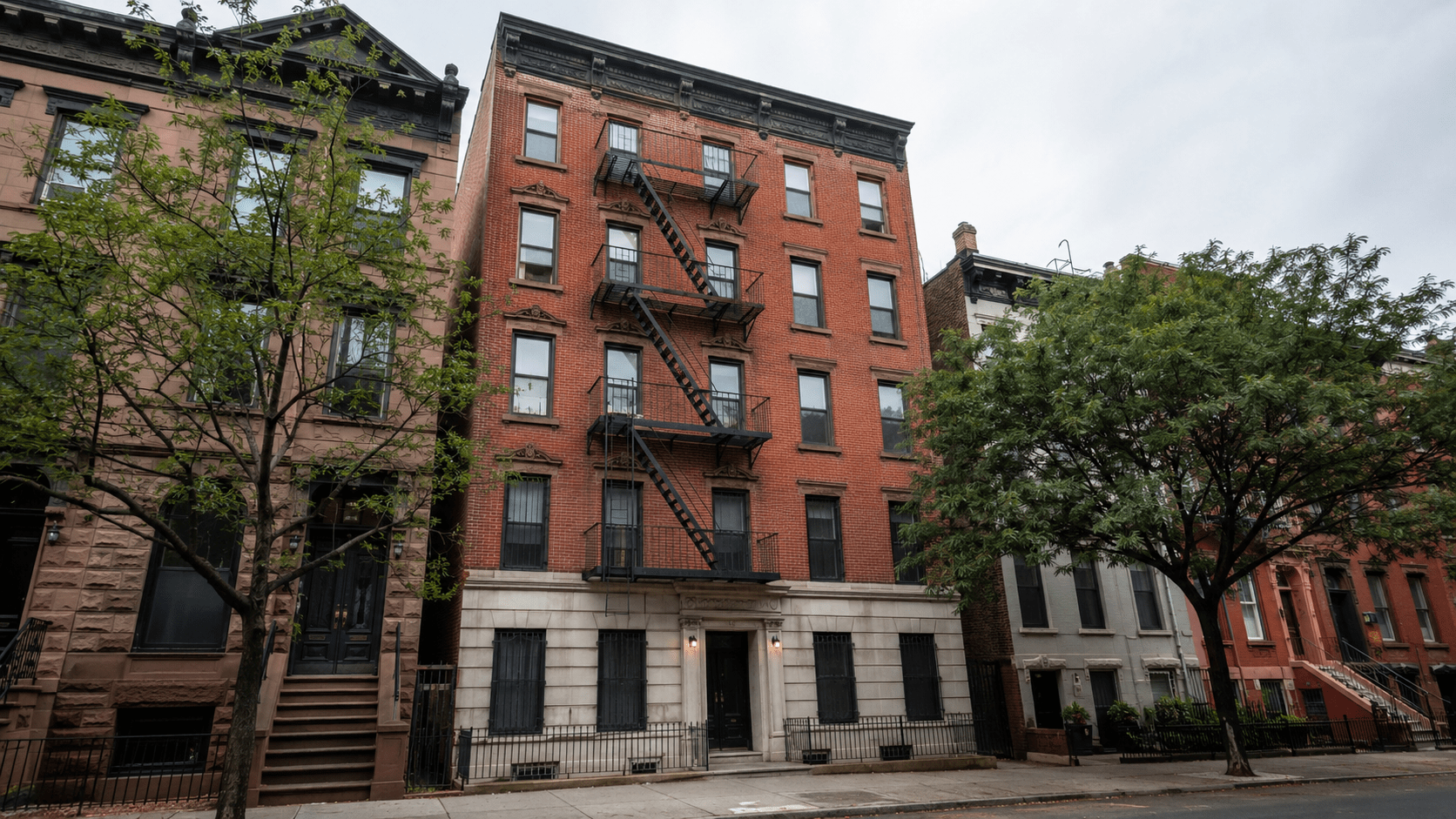
The NYC Multifamily Market Right Now
New York City multifamily saw 1,188 sale transactions in 2025, a 4% increase year-over-year, with total dollar volume of approximately $8.91 billion. The single most important market dynamic for NYC multifamily owners right now is the split between free market and rent-stabilized assets, and that split has never mattered more than it does today.
Free market buildings dominated 2025 activity, accounting for 66% of dollar volume citywide. In Manhattan, free market buildings are trading at an average of $886 per square foot for fully free market assets, while rent-stabilized buildings have seen values fall roughly 45% compared to pre-HSTPA levels, sitting at approximately $249,000 per unit and $362 per square foot. Brooklyn led all submarkets in early 2025 with 96% of dollar volume coming from free market sales. Cap rates for NYC multifamily are currently running between 4.5% and 5.5% for well-positioned free market assets in core boroughs, with value-add and stabilized assets trading at higher cap rates reflecting the additional risk and regulatory complexity.
For owners of mixed buildings or rent-stabilized portfolios, the current environment has created a complex decision: values on stabilized assets continue to face pressure, while free market assets in prime neighborhoods are seeing strong demand and constrained supply driving sustained fundamentals. Class A vacancy in Midtown and Midtown South has returned to below 4% with rent growth near 5%, and affluent Brooklyn neighborhoods such as Williamsburg and Greenpoint are posting similar gains. Knowing precisely where your building sits in this divided market requires a current BOV grounded in 2025 to 2026 transaction data, not historical averages.
What to Expect When You Request a BOV for Your NYC Building
The process is straightforward. After you submit your building’s address and basic details, a licensed broker will review your request and follow up to confirm the information needed and discuss your situation.
To prepare a BOV for a NYC multifamily building, the broker will typically need:
- Building address, borough, and block and lot number if available
- Total unit count and unit mix (number of studios, one-bedrooms, two-bedrooms, etc.)
- Regulatory status of each unit or the building as a whole (free market, rent-stabilized, or mixed)
- Current rent roll showing monthly rents for each unit
- Annual operating expenses: property taxes, insurance, maintenance, and management costs
- Any known capital improvements made in the last five years
- Outstanding violations, J-51 status, 421a exemption status, or any pending regulatory matters
- Current mortgage or debt if relevant to the transaction being considered
A site visit is not typically required for standard NYC multifamily buildings. For larger mixed-use assets or buildings with significant deferred maintenance affecting value, a walkthrough may be recommended. Most BOVs are completed within 2 to 3 business days after property details are confirmed.
Request a BOV for Your NYC Apartment Building
Getting started is free for owners considering a sale. Submit your building address and basic details and a licensed NYC multifamily broker will review your request and follow up promptly. For a national overview of multifamily property valuation, visit our Multifamily Property Value resource.
Frequently Asked Questions
What is a broker opinion of value for a NYC apartment building?
A broker opinion of value (BOV) is a written estimate of your building’s current market value prepared by a licensed commercial real estate broker. For NYC multifamily, the BOV is based on the building’s income, unit mix, regulatory status, recent comparable sales in your submarket, and current buyer demand. It typically delivers in 2 to 3 business days and is appropriate for sale preparation, estate planning, property tax appeals, 1031 exchange planning, and most legal and advisory purposes.
How much does a BOV cost for a NYC multifamily building?
For owners considering a sale, a BOV is typically provided at no charge as part of the broker relationship. For estate planning, a partnership buyout, a property tax appeal, or another non-sale purpose, a modest fee may apply. You will always be told the cost upfront before any work begins. To request a free consultation, contact Broker Opinion of Value at [email protected] or call (203) 712-9244.
Does it matter if my building is free market or rent-stabilized?
Yes, it matters significantly. Free market and rent-stabilized buildings value very differently in today’s NYC market. Free market assets are commanding strong pricing with active buyer demand across all five boroughs. Rent-stabilized buildings have seen material value declines since HSTPA passed in 2019, with Manhattan stabilized assets averaging roughly $249,000 per unit compared to $886 per square foot for fully free market buildings. A BOV from a broker with active NYC multifamily experience will account for your specific regulatory mix and its effect on what buyers will actually pay today.
Can a BOV be used for a NYC property tax appeal?
Yes. A broker opinion of value can support a property tax challenge with the NYC Department of Finance by providing documented evidence of market value based on comparable sales. For formal Tax Commission proceedings, a certified appraisal carries more authority, but a BOV is a practical and cost-effective first step for evaluating whether an appeal is worth pursuing and what the realistic downside on your assessment is.
How accurate is a BOV for a New York City multifamily building?
A BOV prepared by a broker with active NYC multifamily experience and access to current comparable sales is a reliable indicator of what your building would trade for in the current market. It is not a certified appraisal and should not be used where USPAP compliance is required. For pricing decisions, estate planning, tax strategy, and most advisory purposes, a well-prepared BOV gives you a data-grounded foundation for decision-making.