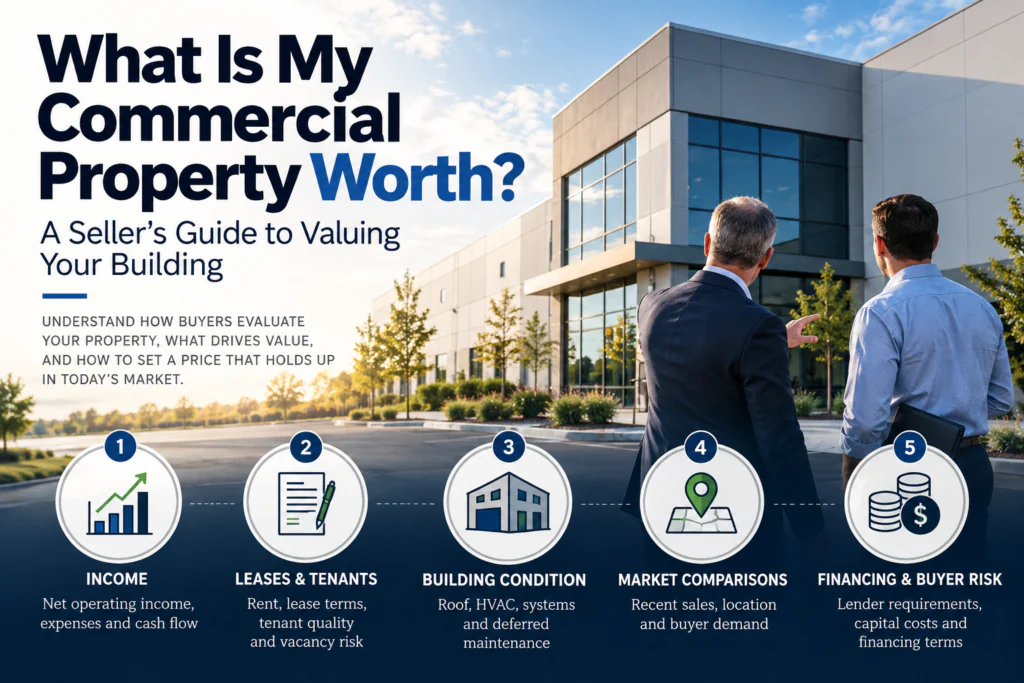
Your commercial property is worth what a qualified buyer will pay after they have checked your leases, your expenses, your title and the condition of the building. An accurate value starts from the same records and inspections a buyer will use, not from the asking prices of other buildings or the county's assessed value.
I started at CBRE and was the first broker hired at Massey Knakal, and I spent much of my career on the listing side. The pricing mistakes I saw most often were not about the market. An owner priced the building on income the buyer could not verify, or on a roof the buyer's inspector condemned in week two. Then the price came down in renegotiation instead of at the start. This guide walks through what a buyer will check, so the value you set is one that holds up.
How to Use This Commercial Property Valuation Guide
Each step asks what a buyer will verify and what you should do about it before you set a price.
- Mark each item Ready (documented and in good order), Fix (worth repairing or curing before you list) or Disclose (leave it, document it and reflect it in the price).
- Gather the document behind every number you plan to show a buyer. A figure you can't document will be discounted.
- Use the results to set a value range, then an asking price within it.
Buying instead? See the commercial property due diligence checklist for buyers.
Step 1: Know Why You Need a Commercial Property Valuation
The reason for the valuation changes which number matters. Say it plainly at the start.
| Purpose | What the value is used for | What to watch |
|---|---|---|
| Sale | Asking price and negotiation range | Value the building as a buyer will underwrite it |
| Refinance | Loan sizing; lenders order their own appraisal | Lenders size on in-place NOI, not projected rents |
| 1031 exchange | Sale price and replacement-property budget | Exchange deadlines leave little time to re-price |
| Estate or inheritance | Date-of-death value, division among heirs | May require a qualified appraisal for tax purposes |
| Partner buyout or divorce | Fair value for one party's share | Both sides need to accept the method |
| Property tax appeal | Evidence that the assessed value is too high | Assessors want sales and income evidence |
Step 2: Assemble the Documents Buyers Will Ask For
A buyer prices uncertainty. Every document you can produce on day one removes a reason to discount.
| Document | Why a buyer wants it | If it's missing |
|---|---|---|
| Rent roll and signed leases | Verifies income, terms and options | Buyer underwrites market rent and adds vacancy |
| Operating statements, 2–3 years | Verifies expenses and NOI trend | Buyer uses its own, usually higher, expense estimates |
| Tax bills and assessment notices | Confirms taxes and any appeal | Buyer assumes reassessment at the sale price |
| Utility bills, 12 months | Confirms who pays what | Buyer assumes owner pays |
| Service contracts | Shows ongoing costs and obligations | Buyer budgets conservatively |
| Survey and title policy | Confirms boundaries, easements, area | Delay while the buyer orders new ones |
| Permits and certificate of occupancy | Confirms legal use and finished work | Unpermitted work becomes a credit or a fix |
| Capital improvement history | Proves roof, HVAC and other upgrades | Buyer treats systems as original |
| Warranties (roof, HVAC) | Transfers value to the buyer | No credit for remaining life |
| Prior appraisals and environmental reports | Shortens buyer diligence | Buyer starts from scratch |
Step 3: Clear Title, Liens and Legal Issues Before Listing
Title problems found during a buyer's diligence cost time, leverage and sometimes the deal. Find them first.
| Item | What a buyer will find | Seller action |
|---|---|---|
| Ownership and authority | Who can sign for the owning entity | Confirm signers, partner consents and any estate authority now |
| Liens and judgments | Mechanics' liens, tax liens, judgments | Pay off or arrange payoff at closing |
| Easements and encroachments | Shared drives, fences over the line, utility easements | Order a survey; resolve with neighbors or disclose |
| Code violations | Open cases with the city | Cure, or price the cure into the sale |
| Litigation and lis pendens | Pending suits against the owner or parcel | Resolve or disclose with a plan |
| Tenant rights on sale | Right of first refusal or first offer in a lease | Read every lease; plan the notice process |
| Tax status | Delinquent taxes; open appeals | Bring current; know the appeal outcome |
Step 4: Confirm Zoning, Permits and Your Certificate of Occupancy
A buyer pays for what the building is legally allowed to be. Confirm it before they ask.
| Item | What a buyer will find | Seller action |
|---|---|---|
| Zoning district | Permitted uses and parking requirements | Get a zoning verification letter from the city |
| Certificate of occupancy | Whether the current use is legal | Locate it, or apply to update it |
| Nonconforming status | Grandfathered use or building | Document it; lenders will ask |
| Unpermitted work | Additions, conversions or systems work without permits | Permit it, remove it or disclose it |
| Unused development rights | Remaining FAR or air rights | Quantify them; they can add to value |
| Higher-value use | Medical, restaurant or residential conversion potential | Show what zoning allows; buyers pay for verified upside |
Step 5: Get Your Rent Roll and Leases Buyer-Ready
For an investor, the leases are the building. Small changes to lease status before a sale can move value more than any repair.
| Item | What a buyer will find | Seller action |
|---|---|---|
| Near-term expirations | Tenants who may leave after closing | Renew or extend key tenants before listing |
| Vacant space | Lost income and lease-up cost | Lease it if you can, or show market rent with support |
| Below-market rents | Upside if leases roll soon | Document market rent and expiration dates |
| Above-market rents | Risk that rent drops at renewal | Expect the buyer to underwrite the drop |
| Gross leases | Owner absorbs expense growth | Consider converting to net on renewal |
| Arrears | Tenants behind on rent | Collect, settle or disclose |
| Estoppels | Tenants confirm rent and terms in writing | Ask tenants early; disputes surface before the buyer does |
| Owner-occupied space | No lease, so no income | Value at market rent, or sell to an owner-user |
Step 6: Calculate Your Net Operating Income the Way a Buyer Will
Net operating income (NOI) is rental income minus vacancy and operating expenses, before debt service. Buyers re-underwrite your NOI before they apply a cap rate, so start from their version.
| Line item | How a buyer adjusts it | What to prepare |
|---|---|---|
| Rental income | Signed leases only; vacant space at market rent with downtime | Rent roll tied to leases |
| Vacancy and credit loss | Market vacancy even if you're full | Tenant history and submarket vacancy |
| Real estate taxes | Reassessed at the sale price where the state allows | Know your state's reassessment rules |
| Insurance | Current quote, not your old premium | Recent quote or renewal |
| Management | A market fee even if you self-manage | Show it in your statements |
| Repairs and maintenance | Normalized; deferred maintenance added back as a cost | Two to three years of history |
| Reserves | Added for roof, HVAC and paving replacement | Capital history and remaining life |
| One-time items | Removed from both income and expenses | Label non-recurring items clearly |
| Owner-paid utilities | Kept as an expense unless tenants reimburse | Lease clauses on utilities |
Step 7: Pre-Listing Inspection — Roof, Facade, Systems and Interior
A buyer's inspector will find what you don't disclose. A pre-listing inspection lets you decide what to fix, what to credit and what to price in on your terms.
Roof, facade, windows and doors
| Item | What a buyer will find | Seller action |
|---|---|---|
| Roof | Age, material, layers, leaks, ponding, flashing | Document age and warranty; repair leaks; price a replacement if near end of life |
| Gutters and drainage | Rust, poor discharge, clogged roof drains | Low-cost fix; do it |
| Facade | Masonry cracks and mortar loss; EIFS or stucco moisture; metal panel corrosion; failed glass seals | Repoint, reseal or test; disclose test results |
| Windows | Single-pane glass, rotted frames, fogged units | Repair obvious failures; price full replacement |
| Doors | Worn storefront, rusted rear doors, no ADA entry, damaged roll-up doors | Repair hardware and closers; disclose ADA status |
| Roof material | Typical service life (approx.) |
|---|---|
| Asphalt shingle | 20–30 years |
| Metal | 40–60 years |
| TPO, PVC or EPDM membrane | 20–30 years |
| Modified bitumen | 15–25 years |
| Built-up (tar and gravel) | 20–30 years |
| Tile or slate | 50+ years |
Service-life figures are typical industry ranges; climate and maintenance move them. A buyer will price a roof by its remaining life, so document the installation date.
Electrical, HVAC, plumbing and life safety
| Item | What a buyer will find | Seller action |
|---|---|---|
| Electrical | Service size, panel age, aluminum or knob-and-tube wiring, metering | Fix hazards; document capacity |
| HVAC | Unit ages, refrigerant type, service records, zoning per suite | Service every unit; gather records; price units past their life |
| Plumbing and sewer | Pipe material, water heater age, sewer line condition | Camera-scope the sewer line; fix active leaks |
| Fire and life safety | Sprinklers, alarm and inspection tags | Bring inspections current |
| Accessibility | Entrance, restrooms, parking | Know your gaps; buyers will |
| Hazardous materials | Asbestos or lead paint in older buildings | Survey if renovation is likely; disclose results |
Interior: flooring, subfloor, basement moisture, bathrooms and kitchens
| Item | What a buyer will find | Seller action |
|---|---|---|
| Flooring and subfloor | Worn finishes, soft spots, slab cracks | Replace worn common-area flooring; repair soft spots |
| Basement and moisture | Stains, odor, efflorescence, sump condition | Fix the water source first; disclose history |
| Ceilings and walls | Stained ceiling tiles | Fix the leak, then replace the tiles |
| Bathrooms | Fixture condition, count, ADA stall | Repair and clean; price larger renovations |
| Kitchens and break rooms | Dated finishes, venting, grease trap for food use | Clean and repair; document permits |
| Storage and common areas | Clutter, dated lobby, poor lighting | Clear out and freshen; inexpensive and visible |
Site: driveway, parking, rear access, landscaping and signage
| Item | What a buyer will find | Seller action |
|---|---|---|
| Driveway and parking | Cracks, potholes, faded striping | Patch, sealcoat and restripe |
| Rear access | Blocked or unusable service access | Clear it; confirm easements |
| Drainage | Water flowing toward the building | Regrade or clear catch basins |
| Landscaping | Overgrowth, roots near the building | Trim and clean up before photos |
| Signage | Sign rights and condition | Repair signs; document pylon rights for tenants |
Step 8: Environmental and Flood Review
Most buyers' lenders require a Phase I Environmental Site Assessment. If your site or its neighbors had industrial, auto or dry-cleaning uses, a Phase I ordered before listing lets you find problems on your timeline.
- Phase I ESA, or the most recent one, with its date
- Underground storage tank records and removal documentation
- FEMA flood zone; a high-risk zone raises the buyer's insurance and lowers NOI
- Mold, radon or asbestos test results you already hold
Step 9: How Buyers Will Value Your Commercial Property
Buyers value a commercial property two ways: what comparable buildings sell for per square foot, and what the building's NOI supports at a market cap rate. Who your likely buyer is decides which carries more weight.
Sales comparison approach
- Comparable sales of the same property type and similar size, nearest and most recent first
- Closed prices count more than asking prices; asks typically run above closed values
- Adjustments for size, age and condition, and location
- In non-disclosure states such as Texas, closed prices are not public, which makes a broker's market data more important
Income approach and cap rate
Value equals NOI divided by the cap rate. Small changes in the cap rate move value a great deal:
| NOI | Cap rate | Value |
|---|---|---|
| $500,000 | 5% | $10,000,000 |
| $500,000 | 6% | $8,333,333 |
| Difference | 1 point | About $1.67 million |
That is why a credible NOI and a defensible cap rate matter more than any single comparable.
Which approach carries your value
| Likely buyer | How they price | What raises your value |
|---|---|---|
| Owner-user | $/SF against comparable buildings; SBA financing | Condition, layout, available space, clean title |
| Investor | NOI and cap rate | Documented income, long leases, credit tenants |
| Value-add buyer | Upside after renovation and lease-up | Verified zoning, realistic rehab costs |
| Developer | Land value and what can be built | Zoning, development rights, site access |
Step 10: Fix, Credit or Price In — Deciding What to Repair Before You Sell
Not every repair pays back. The test is whether the fix adds more value than it costs, or removes a reason for a buyer to walk.
| Do this | When | Examples |
|---|---|---|
| Fix before listing | Low cost, highly visible, or a safety or code issue | Active leaks, gutters, striping, landscaping, expired life-safety inspections |
| Get a bid and disclose | Large, known items buyers will find anyway | Roof replacement, HVAC units past their life, facade work |
| Offer a credit | The buyer wants to do the work their way | Tenant improvements, cosmetic renovation |
| Price it in | The cost is uncertain or the buyer plans to redevelop | Environmental testing results, full system replacement |
Step 11: Set the Asking Price From a Defensible Value Range
Set a value range first, then choose the asking price inside it. An asking price set above what the evidence supports tends to sit on the market and then sell lower after renegotiation.
- Low edge: the closest comparables in age, size and location
- High edge: the full comparable set, including newer or better-located buildings
- Income value at your normalized NOI and a market cap rate
- Asking price: inside the range, with room for the credits you expect to give
Reference points that are not market value
| Number | Why it misleads | How to use it |
|---|---|---|
| County assessed value | Set for taxes; often lags the market, especially in non-disclosure states | A floor check, and a basis for a tax appeal if too high |
| Your purchase price | The market and the building have changed since | Context only |
| Online estimates | Rarely built on your leases or condition | Ignore for commercial property |
| Asking prices of other buildings | Asks run above closed prices | Discount them before comparing |
| A neighbor's sale | Different size, condition or leases | One comparable among several |
Step 12: Understand How Your Buyer's Financing Caps Price
Most buyers borrow, and the loan is often sized by your building's income rather than its price. If your NOI only supports a smaller loan, the buyer needs more cash or offers less.
- Lenders commonly cap loans at 1.25x debt-service coverage on NOI, which can bind before 70–80% loan-to-value
- Higher interest rates reduce the loan the same NOI supports
- Owner-users can use SBA loans that lend against the business as well as the building, which widens your buyer pool
- A buyer's lender will order its own appraisal; documented income and condition help it come in at price
Commercial Property Valuation by Property Type
Buyers of each property type check different things first. These are the items that move value for each, and what you can prepare.
Selling an office building
| Item | What a buyer will find | Seller action |
|---|---|---|
| Suites and layout | Divisible suites; cost to re-lease vacant space | Show plans; market vacant suites before the sale |
| Parking ratio | Spaces per 1,000 SF against the submarket | Document parking and any shared agreements |
| HVAC per suite | Separate zones and controls | Service records by unit |
| Medical potential | Zoning, plumbing and parking for medical tenants | Confirm zoning allows it; buyers pay for verified upside |
Selling a retail building
| Item | What a buyer will find | Seller action |
|---|---|---|
| Visibility and signage | Frontage, traffic counts, sign rights | Repair signs; document pylon positions and traffic counts |
| Anchor and co-tenancy | Anchor lease term; rent-reduction clauses | Extend the anchor if you can |
| CAM reconciliations | Recoveries billed vs. actual | Reconcile and resolve disputes before listing |
| Restaurant infrastructure | Grease trap, venting, gas | Document permits; it widens the tenant pool |
Selling an industrial building
| Item | What a buyer will find | Seller action |
|---|---|---|
| Clear height and loading | Measured clear height; dock and drive-in doors | Measure and document; repair doors and levelers |
| Power | Amperage, voltage, 3-phase service | Get the service specs in writing |
| Truck court and yard | Court depth, trailer parking, outdoor storage rights | Show site plan and zoning allowance |
| Environmental history | Past manufacturing, floor drains, tanks | Order a Phase I early |
Selling a multifamily building
| Item | What a buyer will find | Seller action |
|---|---|---|
| Rent roll and regulation | Collected rents, arrears, regulated units | Reconcile rent roll to deposits; confirm regulatory status |
| Unit condition | Kitchens, baths, flooring per unit | Turn vacant units; list renovated units and costs |
| Utilities | Who pays heat, water and electric | Show meter setup and any reimbursements |
| Life safety | Detectors, egress, lead paint in older buildings | Bring compliance current |
Selling a mixed-use building
| Item | What a buyer will find | Seller action |
|---|---|---|
| Use split | Share of income from commercial vs. residential | Show income by use; it affects the buyer's loan type |
| Shared systems | Commercial tenants on residential utilities | Document reimbursements or separate meters |
| Ground-floor tenant | Use, lease term, complaints from residents | Extend a strong storefront tenant before listing |
Valuation note: buyers value each income stream at its own cap rate and vacancy, then add them. A weak storefront or a regulated rent roll will be priced separately, not averaged away.
Commercial Property Valuation FAQ
What is my commercial property worth?
Your commercial property is worth what comparable buildings have sold for and what your documented net operating income supports at a market cap rate, adjusted for condition, leases and title. A broker opinion of value or an appraisal turns those inputs into a range for your specific building.
How is commercial property valued?
Commercial property is valued mainly by the sales comparison approach (price per square foot against similar sales) and the income approach (NOI divided by a market cap rate). The cost approach is used for special-purpose or newer buildings.
Is my county assessed value the same as market value?
No. The assessed value is set for property taxes and often lags the market. It can be above or below what a buyer would pay. If it is well above market value, it may support a property tax appeal.
What is the difference between a broker opinion of value and an appraisal?
A broker opinion of value (BOV) is a licensed broker's estimate of the likely sale price, based on comparables, income and current buyer demand. An appraisal is prepared by a licensed appraiser to professional standards and is generally required for lending, tax and court purposes. Sellers often start with a BOV to set a price and decide whether to sell.
Should I make repairs before selling my commercial building?
Fix items that are inexpensive, visible or safety-related. For large items such as a roof replacement, get a bid and disclose it; buyers will discount an unknown cost more heavily than a documented one.
Request a Broker Opinion of Value for Your Property
If you are deciding whether to sell, refinance, settle an estate or appeal your taxes, send me the property address, your reason for the valuation and your timeline. I review every request personally. Depending on the property and market, I will either prepare a broker opinion of value myself or connect you with a licensed broker who specializes in your property type and location.
A broker opinion of value is not an appraisal and should not be used in place of one where an appraisal is required.