Maximizing Sales Price When It’s Time to Sell Commercial Real Estate
I’ve put together an outline of the items you need to prepare before selling your property.
The more organized and transparent, the fewer obstacles you will be faced with during the marketing and during the transaction.
Organization and transparency are critical to appearing as an honest seller. Hidden problems will always surface. One of the keys to achieving a top sales price is a direct result of being prepared and disclosing issues up front. Clarity removes doubt and suspicion such as “what else was not disclosed”.
The first step starts with your property. All parts of it. From the dirt to the roof. What is the zoning? What is the potential to a new buyer? Why did you buy the property? Is there is a history and story?
Through the page, you’ll find links to third party resources.
I hope you find the following helpful.
Maximizing Sales Price With Digital Press Releases
Early in my commercial real estate career, I wrote an article about a property I sold as a broker at 11 Gramercy Park NYC. I sent the article on a whim to the New York Times. Two months later I was shocked to see they published it on the front page of the Sunday New York Times Real estate section.
For the next 30 years I’ve published hundreds of Press Releases for myself and real estate brokers, developers and financiers. Nothing says credibility like visibility in the press. That’s why I created Crepressreleases.com. Click the link as you go through this page.
You’ll also find resources to help you sell commercial real estate throughout our Broker Opinion of Value website.
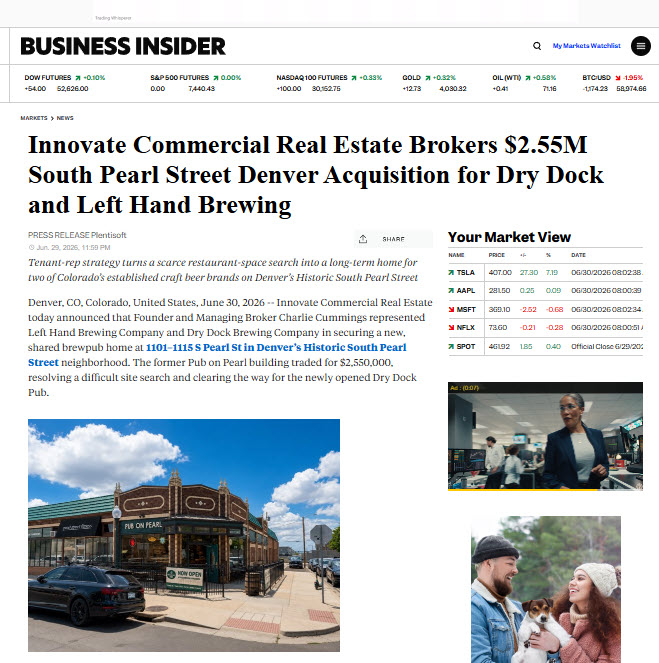
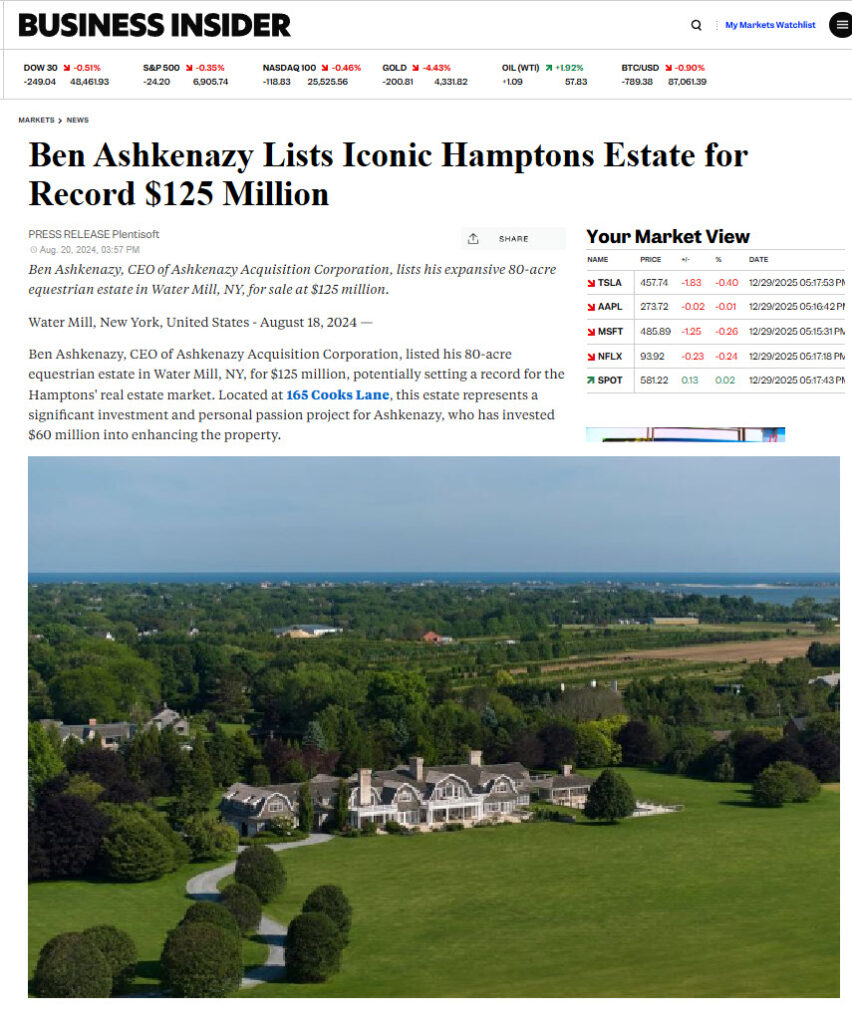
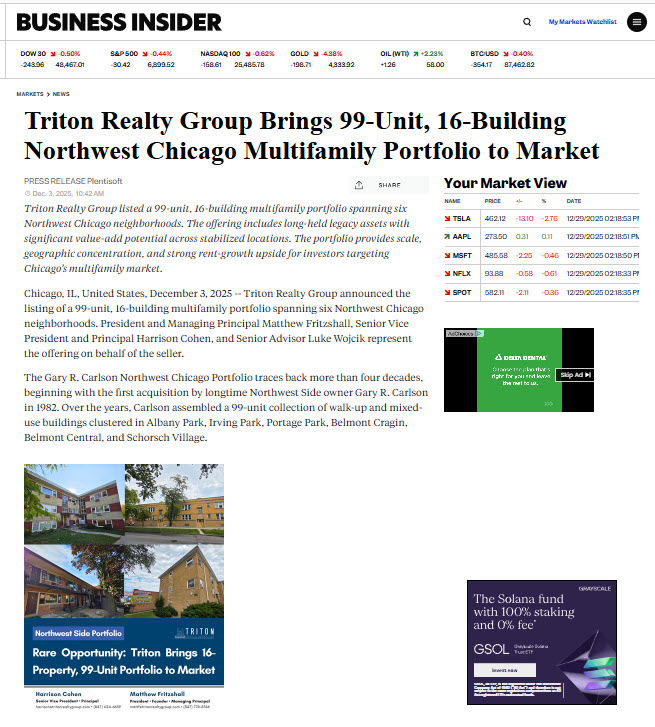
CRE Press Releases — This is another site providing information and case studies of successfully completed sales as a result of Mass Exposure. CRE Press Releases attract the highest paying buyers locally, regionally and nationally. We have found Digital Press Releases on Business Insider and Google and MSN News are the most valuable way to reach a targeted audience no matter the size and value. We’ve used Press Releases to promote properties from $1 Million to $125 Million.
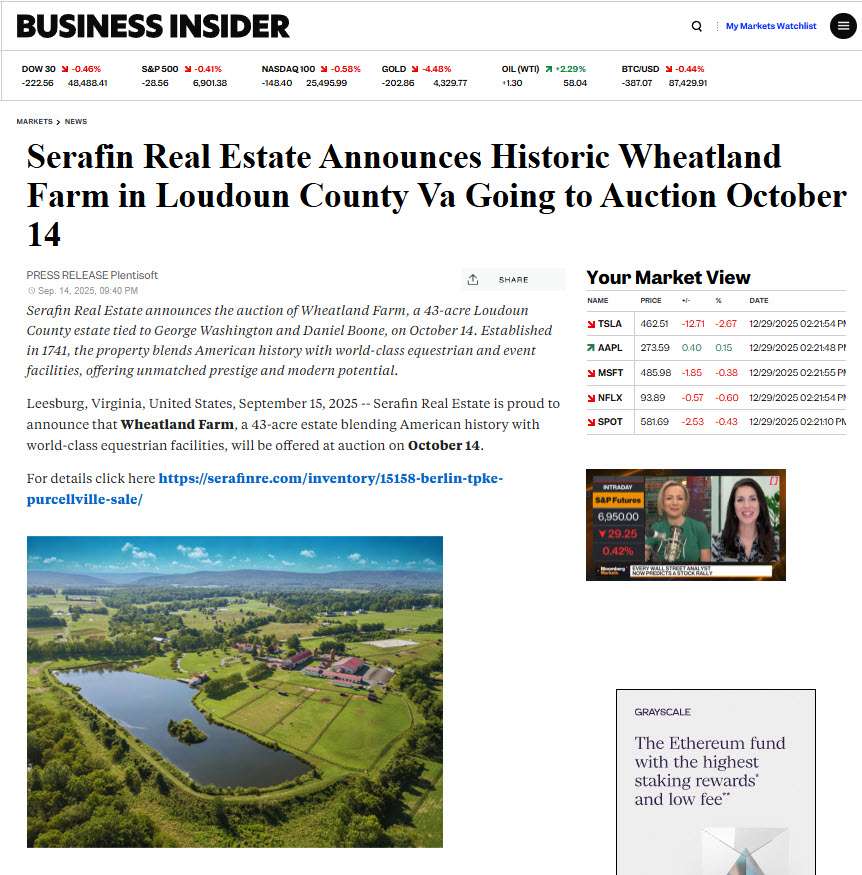
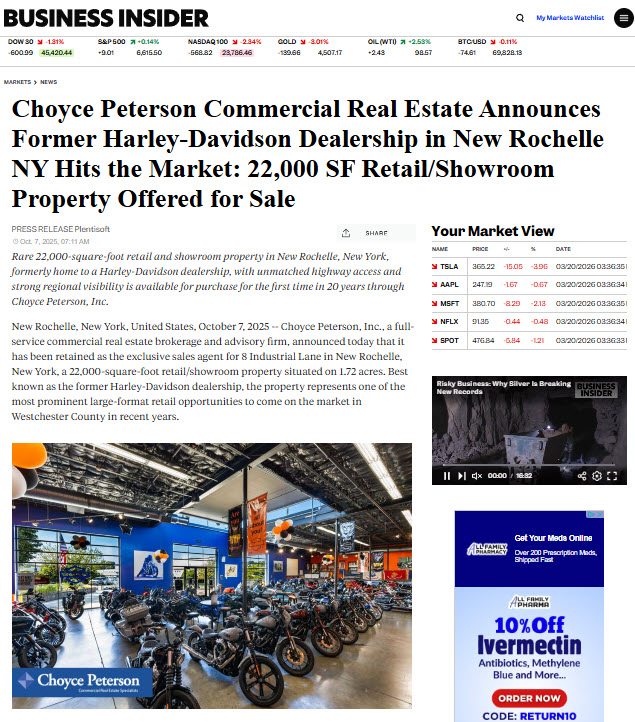
Read more about https://serafinre.com featured in Business Insider below.
A note before we begin: this is operational guidance drawn from three decades in the business. It is not legal or tax advice. Every transaction has facts that change the answer, so bring your attorney and CPA in early, that’s step 1.2 for a reason.
I. The Pre-Listing Phase
1.1 Define Your Objective and Your Timeline
Every subsequent decision to sell commercial real estate at maximum price follows from this one, so it’s worth the time to think it through carefully.
Two common contexts. Some sales are governed by a date — a loan maturity, a partnership agreement, a planned retirement, a portfolio rebalancing. Others are governed by a number, where the owner has the flexibility to wait for the right buyer. Both are entirely legitimate positions, and each calls for a different strategy. Clarity about which one you’re in is what allows you to build the right plan.
Your timeline informs your pricing strategy. As a general guide:
| Timeline | Pricing posture | What it optimizes for |
| 30–90 days | At or slightly inside market | Certainty and speed of close |
| 4–8 months | At market, with negotiating room | Balance of price and probability |
| 9–18 months | Above market, patient | Maximum price, given carrying costs |
Any of these can be the right choice. What matters is that your pricing and your timeline are aligned with each other, and that you’ve accounted for the carrying costs of the longer paths.
Tax planning belongs at the beginning. The structure of the sale can influence what you sell, when you sell, and how much you keep. Worth modeling before you list to sell commercial real estate:
- 1031 exchange. Defers capital gains when proceeds are reinvested in like-kind property. The timeline is fixed: 45 days from closing to identify replacement property, 180 days to close on it. Engage a qualified intermediary before closing so the proceeds are held correctly from the start.
- Capital gains. The federal long-term rate, the 3.8% net investment income tax, and applicable state tax. Model the actual figure so you’re planning against a real number.
- Depreciation recapture. Depreciation taken over the hold period is recaptured at sale, with unrecaptured Section 1250 gain taxed at up to 25%. On a long-held asset this is a meaningful line item, and it’s better known early.
- Alternative structures. Installment sales, opportunity zone reinvestment, and charitable structures each fit particular circumstances. Your CPA can tell you quickly whether any of them apply to yours.
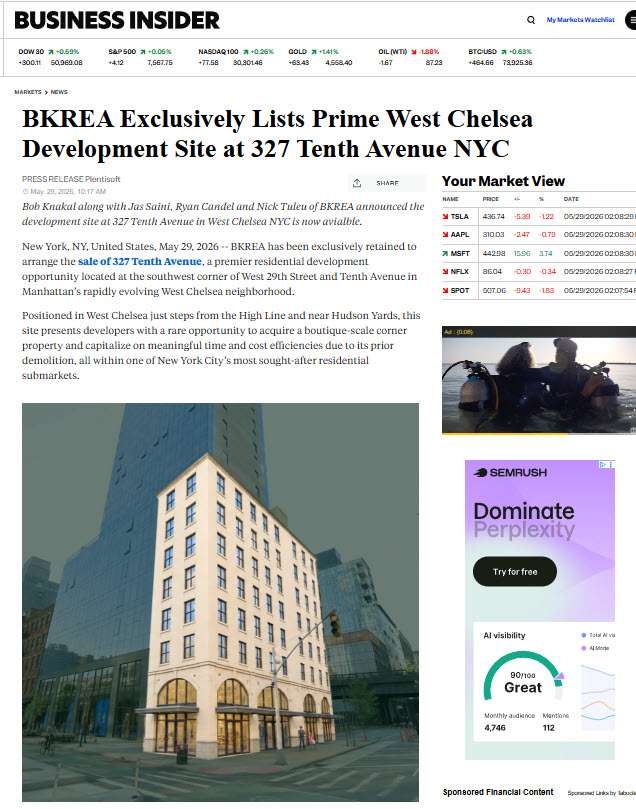
Learn more about https://www.bkrea.com/ featured below.
1.2 Assemble Your Deal Team Early
The team you engage to sell commercial real estate before listing shapes how smoothly everything afterward runs.
Commercial broker. Useful things to ask about, in order of what tends to matter most:
- Recent closings in your asset class and price band. Completed transactions are the clearest indicator of relevant experience.
- Their buyer relationships. A well-connected broker can tell you specifically who they’d bring to your property and why.
- A written marketing plan. Named channels, defined budget, and a timeline give you something concrete to evaluate and to hold to.
- Their track record in documented form. Case studies and seller references let you see how the process actually went, start to finish.
Real estate attorney with commercial experience. Commercial purchase agreements, estoppel certificates, subordination agreements, title exceptions, and entity-level transfers are a distinct specialty. Asking how many commercial transactions they closed last year is a simple, useful question.
CPA or tax strategist. Most valuable before the listing, when structure is still flexible.
Environmental consultant. For industrial properties, retail with prior dry cleaning or fueling uses, or any site with an operating history, a Phase I ordered on your own schedule gives you a document in hand and full control of the timing.
1.3 The Broker Opinion of Value
Step one before you sell commercial real estate is to establish a well-supported value early is one of the highest-leverage things you can do, and it happens before the property is ever marketed.
A Broker Opinion of Value (BOV) — also called a Broker Price Opinion, or BPO — is a licensed broker’s professional estimate of what your property will trade for in the current market.
BOV compared with a formal appraisal:
| Broker Opinion of Value | Formal appraisal | |
| Prepared by | Licensed broker | Licensed or certified appraiser |
| Cost | Often complimentary or low-cost | $2,500–$10,000+ |
| Turnaround | Days | Weeks |
| Best suited for | Pricing decisions and pre-listing strategy | Lender requirements, litigation, estate and tax filings |
| Reflects | Live market conditions and current buyer appetite | Standardized methodology |
Use a BOV to inform your pricing and timing decisions. Use an appraisal when an independent third party — a lender, a court, a tax authority — requires a formal valuation.
What a thorough BOV includes:
- Sales comparison approach — recent trades of genuinely comparable assets, with adjustments for size, age, location, and condition
- Income approach — your NOI capitalized at a market cap rate for your asset class and submarket, which is how most investors will underwrite the property
- Replacement cost approach — the cost to build the asset today, which provides useful context in some markets
- Market context — absorption trends, comparable marketing periods, and the depth of the buyer pool at your price point
How to read a valuation. When you receive more than one opinion, the most useful comparison is of the reasoning rather than the number. Start the process to sell commercial real estate with aA well-supported valuation will include the comparable sales it relies on, the cap rate applied and why that rate fits your submarket today, actual income shown separately from projected income, and an estimated marketing period. Asking each broker to walk you through their rationale in writing is a straightforward way to see which analysis is best.
You can start that process at BrokerOpinionOfValue.com, where we’ve assembled detailed information on specific property types and use cases to help maximize your price before you sell commercial real estate.
1.4 Pre-Listing Property Audit
The principle here is simple: know your property completely before you present it. Information you surface to sell commercial real estate yourself becomes part of the pricing conversation from the outset, on your terms and your schedule.
Physical condition. Roof, HVAC, paving, structure, and life safety systems. A property condition assessment gives you a clear picture. You aren’t obligated to correct everything. What matters is knowing what’s there, so you can price it, address it, or disclose it deliberately.
Environmental. A Phase I ESA is standard for industrial and most retail. Having it in hand allows you to present the full picture with confidence.
Lease audit. For income-producing property, this is where much of your value is documented. Buyers will underwrite the rent roll line by line, so reviewing it first puts you in a strong position:
- Confirm the rent roll reconciles to the executed leases, including all amendments
- Map lease expirations across the next three years. Rollover timing is a meaningful input to valuation
- Note tenant credit quality: national credit, regional operator, and local business each carry different cap rate treatment
- Catalog options, renewal rights, rights of first refusal, co-tenancy provisions, and termination rights
- Confirm CAM reconciliations are current and security deposits are properly accounted for
- Document the current standing of each tenant
Zoning and entitlements. Confirm current zoning and permitted use, and gather documentation for any legal nonconforming status, improvements, and certificates of occupancy. If there’s unused density or an available entitlement path, document that as well. It’s genuine value and it belongs in your offering materials.
II. Preparing the Asset for Market
2.1 Financial Package Assembly to Sell Commercial Real Estate at Maximum Price
Investors are buying an income stream. Your financial package is how that income stream is presented, and clarity here does a great deal of work.
The T-12. Trailing twelve months of actual operating income and expense, plus two prior years, presented consistently and reconciled to your tax returns. Where a period contains something unusual — a capital expense, a vacancy, an insurance adjustment — a brief footnote explaining it allows a buyer to underwrite the property accurately.
Rent roll. Tenant, suite, square footage, base rent, rent per square foot, escalations, commencement and expiration dates, options, deposits, and current standing. Including WALT (weighted average lease term) is a helpful touch; sophisticated buyers will calculate it, and providing it demonstrates command of your asset.
Cap rate positioning. Know where comparable assets in your submarket are trading in the current quarter. From there you can position deliberately — at market for a clean, well-attended process, slightly wide to encourage a competitive field, or tight when you hold a genuinely scarce asset and have time available.
Actuals and pro forma together. The most effective approach is to present actual performance and projected performance side by side, each clearly labeled, with a stated basis for every assumption: market rents supported by lease comparables, lease-up timing supported by absorption data, expense adjustments supported by actual bids.
Buyers respond well to upside that’s documented. Sourced assumptions give a projection real credibility, and they let a buyer underwrite your case rather than build their own from scratch.
Note – When you are ready to sell commercial real estate, Business Insider Press Releases create credibility while reaching every possible buyer. No matter the size or type of property. Whether Commercial Land or any type or price Business Insider produces extraordinary results.
2.2 Physical Preparation
Curb appeal. Landscaping, striping, signage, cleaning, lighting, and lobby presentation. This is among the highest-return work in the entire process, because a buyer’s impression forms in the first minutes of a tour and colors everything that follows.
Presenting vacant space. Clean, well-lit, freshly painted space with a demising plan or test fit displayed helps a buyer picture the space leased and the income realized. A modest test fit often returns many times its cost in how the opportunity is understood.
Professional photography and drone. Exterior imagery in good light, interiors, and aerials that place the property in context. For retail and industrial, aerial footage showing proximity to highways, interchanges, and traffic generators communicates location advantages that are difficult to convey in words. Strong imagery is what earns a click in a crowded listing feed.
Virtual tour. A Matterport or equivalent 3D walkthrough. Out-of-market buyers and 1031 purchasers working within a 45-day identification window frequently build their shortlist from virtual tours before scheduling travel. Being available in that format keeps you in consideration.
Get a BOV for Multi Family Properties and Portfolios at https://brokeropinionofvalue.com/multifamily-property-value/
2.3 The Offering Memorandum
The most effective offering memoranda make an argument. Every element supports a clear thesis about why this property, at this price, at this moment.
Executive summary. Sell Commercial Real Estate with One -Two pages, front-loaded, covering the asset, the numbers, and the investment thesis. A buyer who reads only this section should be able to decide confidently whether to continue.
Market overview. Submarket fundamentals, demographics, traffic counts, employment drivers, comparable sales and leases, and the development pipeline. Citing sources throughout gives the data weight.
Investment highlights. Specific and quantified. “Eight units at $1.85/SF against a submarket average of $2.40, representing $94,000 of additional annual NOI at market rent” gives a buyer something to underwrite.
Transparent disclosure. Addressing your two or three most notable considerations directly. A concentrated 2027 rollover, single-tenant exposure, a roof approaching replacement, is one of the most effective things you can do. Buyers will identify these during diligence in any case. Presenting them yourself establishes your credibility on every other figure in the document, and it allows a buyer to price the item at the outset, which produces cleaner offers and smoother closings.
This is the same principle behind Proof Stacking: verifiable information, openly presented, is what builds the trust that supports a premium price.
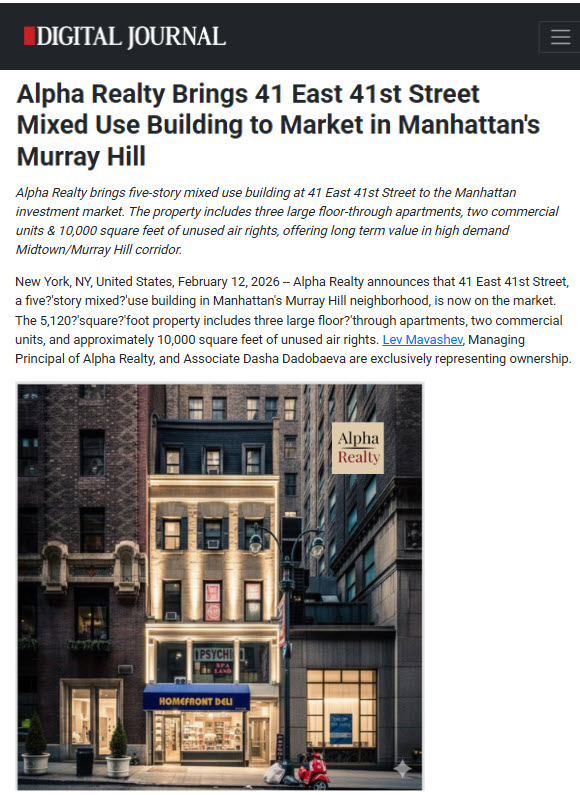
III. Marketing and Exposure Strategy
This is where the sale is made, and it rewards investment.
Consider two identical buildings; same submarket, same vintage, same NOI. One trades at a 6.2 cap in 71 days. The other takes fourteen months and closes at a 7.1. The difference is rarely the asset itself. It’s how clearly the story was presented and how many qualified buyers saw it.
The reason exposure translates so directly into price is structural: your sale price is set by the second-most-motivated buyer, because that’s who your best buyer is bidding against. Everything in this section exists to make certain that second buyer knows your property is available.
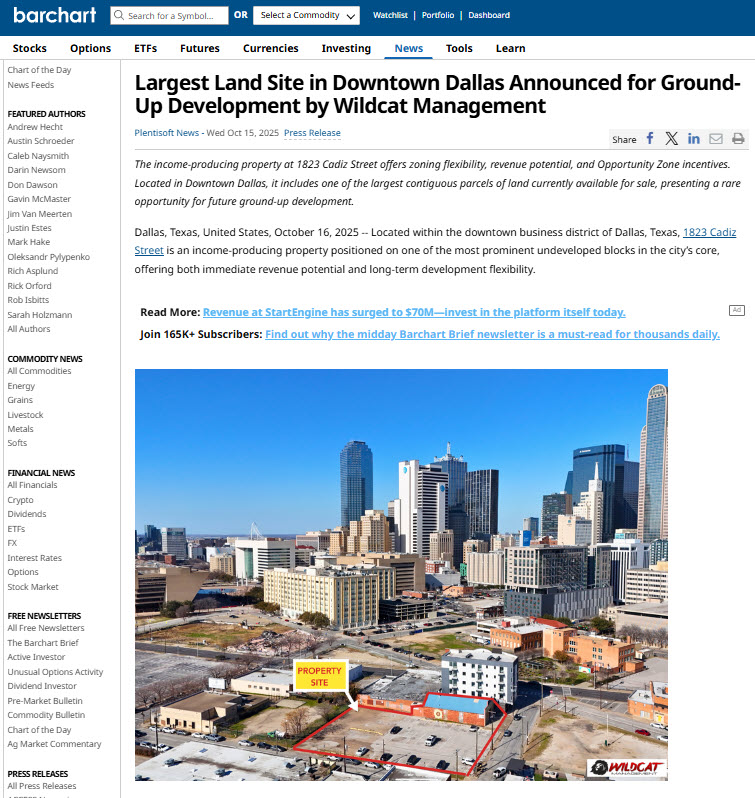
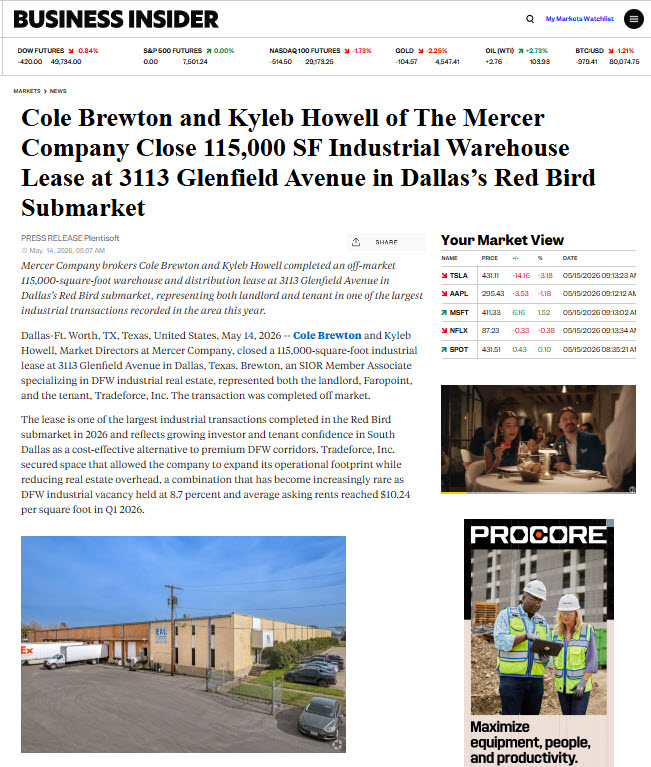
Learn about the Dallas CRE Market at https://tanyaoutloud.com
3.1 The Three-Tier Exposure Model For selling Commercial Real Estate
Each tier reaches a genuinely different audience, and running all three widens the field considerably.
| Tier | Channels | Who it reaches |
| Local | Broker networks, chamber of commerce, direct outreach to neighboring owners and tenants | The adjacent owner or tenant looking to expand — often the buyer with the strongest strategic reason to pay a premium |
| Regional | Regional listing platforms, regional investor groups, targeted LinkedIn campaigns | Operators expanding into your market who already understand the fundamentals |
| National | National listing platforms, institutional buyer databases, press distribution | 1031 buyers working within their identification window and institutional capital allocating to your asset class |
Running all three creates the conditions for competition. The national tier builds the field; the local tier often produces the strategic premium.
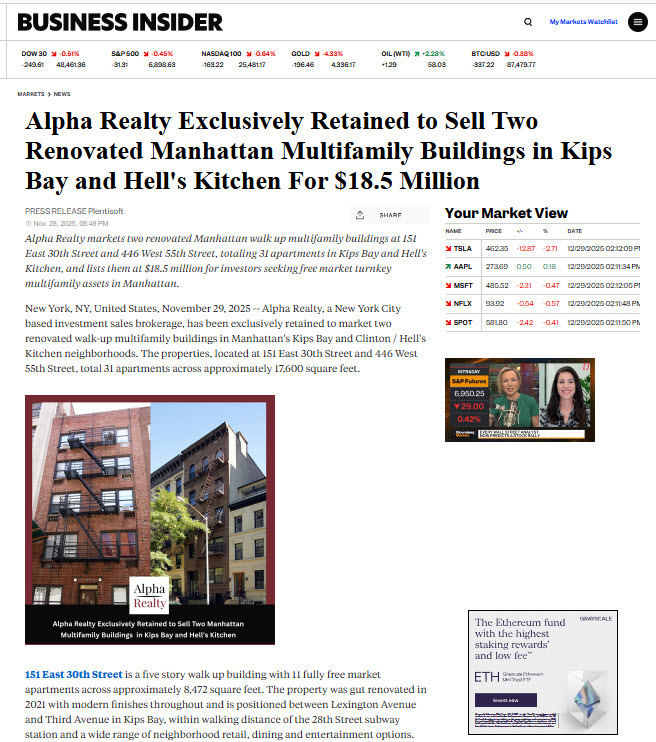
Selling commercial real estate in NYC, visit Multifamily experts at at https://www.alpharealtyny.com/
3.2 The Press Release — Mass Exposure That Reaches the Highest-Paying Buyers
Listing platforms reach buyers who are actively searching. A press release reaches the substantially larger group who aren’t searching yet including many of the best-capitalized buyers in the market.
This is the highest-leverage step available for maximizing sale price, because price follows from the size and quality of the buyer pool. A well-distributed release expands that pool into audiences a listing alone doesn’t touch.
A structured property press release through CREPressreleases.com places your commercoal real estate in front of exactly those audiences.
Where your property appears:
| Placement | Who it reaches | How it supports your price |
| Business Insider | National business and investor readership | Major-publication coverage presents your property with genuine editorial credibility |
| Google News | Anyone searching your address, submarket, or asset class | Permanently indexed, so buyers searching weeks later still find your story |
| MSN and Bing News | Microsoft’s news network and default-browser audience | Very broad distribution, and it feeds Bing and Copilot results |
| CRE trade press | GlobeSt, Commercial Observer, REJournals | Read daily by acquisition professionals |
| Local & regional business journals | Owners, developers, and operators in and around your market | Reaches the neighboring owner most likely to pay a strategic premium |
What that exposure accomplishes:
Local reach. Geo-targeted distribution to business journals and real estate publications in the property’s metro. The neighboring owner who would value your property most highly may not be watching listing platforms, but they do read the local business journal.
Regional reach. Regional business wire distribution reaching investors and developers in adjacent markets actively looking to enter your region.
National reach. Business Insider, MSN, and the CRE trade press place your property in front of private investors, high net worth individual, institutional capital and 1031 buyers locally, regionally and nationwide.
Search visibility that compounds. Press releases create permanently indexed pages that rank for searches like “[property address] for sale” and “[submarket] commercial real estate.” A buyer who searches your address months from now still arrives at your story.
AI search visibility. When a buyer asks ChatGPT, Perplexity, or Copilot about your market or property type, those systems draw on indexed news. Business Insider, MSN, and Google News are among the sources they weight most heavily. A release does more than reach readers. It establishes your property as a known entity in the systems buyers increasingly use to research.
Syndication. Distribution feeds fresh signals into the aggregator ecosystem, CoStar, LoopNet, Crexi, reinforcing your listing across every channel at once.
Institutional discovery. Acquisition teams at funds and REITs run automated news alerts by asset class, market, and price band, and they source opportunities directly from those feeds. A press release places your property in that flow.
Underlying all of it is a principle worth naming: a well-distributed release is third-party validation. There’s a meaningful difference between an owner stating that a property is available and the market reporting it. That’s the foundation of Proof Stacking — information you present is a claim, and the same information carried by independent sources becomes evidence. Buyers pay for evidence.
You’ll find case studies of completed sales driven by Mass Exposure at CREPressreleases.com.
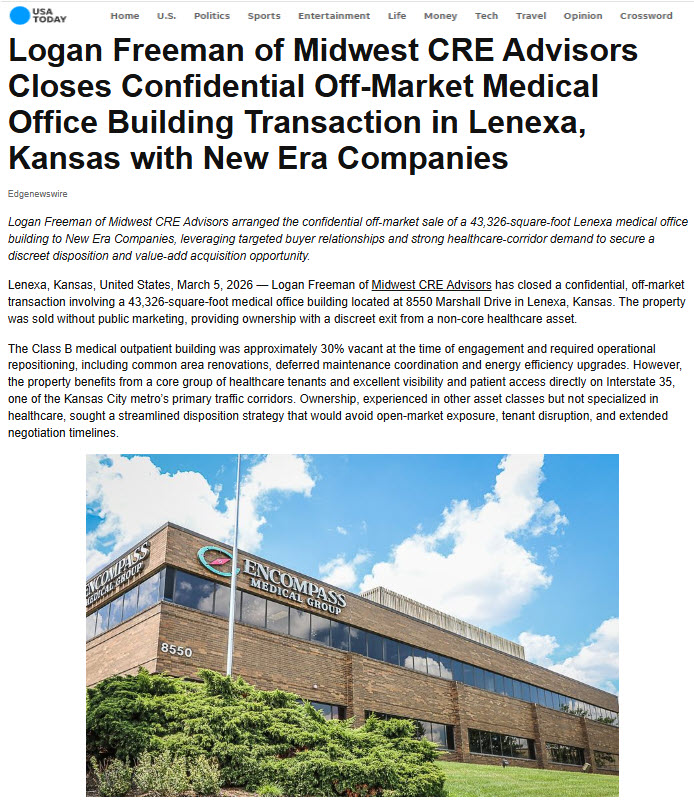
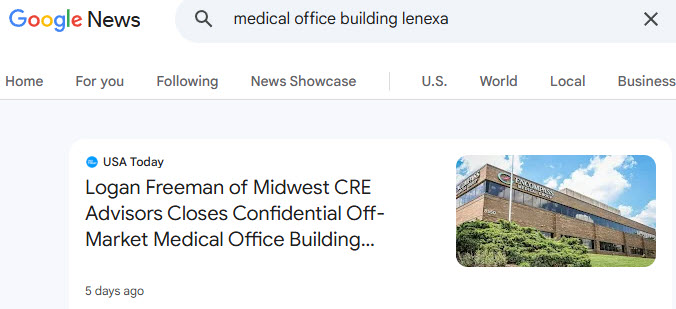
Looking to sell commercial real estate In Kansas City, visit https://www.mwcreadvisors.com/
3.3 Digital Marketing Stack
- Dedicated property website. Its own URL built around the address, serving as the canonical destination every other channel points to.
- Email to the broker’s buyer database. Segmented by buyer type, since 1031 purchasers, local operators, and institutional capital each respond to different aspects of the same opportunity.
- Targeted paid social. LinkedIn targeting by title and geography, and investor and 1031 exchange groups. Modest cost relative to transaction size, and effective at reaching buyers outside the usual channels.
- Video walkthrough and market analysis. A narrated property tour and a short submarket overview. These rank in YouTube, they’re genuinely useful to out-of-market buyers, and they remain available long after the initial marketing period.
3.4 The Broker’s Network Effect
Pre-marketing. Experienced brokers introduce a property to their most active buyers before it goes public This tests pricing, builds anticipation, and occasionally produces an offer at launch. Done thoughtfully, it means you enter the market with momentum already established.
Off-market and pocket listings. These offer confidentiality, speed, and no public marketing history. They offer real advantages in the right circumstances, particularly where tenant or employee relationships call for discretion. A broad process, by contrast, is what reveals the full depth of buyer interest. Both are legitimate strategies; the useful thing is to choose between them deliberately, with a clear understanding of what each one is designed to accomplish.
Broker opens and industry events. Consistently effective. A well-run broker open puts a dozen buyer representatives in the building within ninety minutes, and word travels through the brokerage community from there.
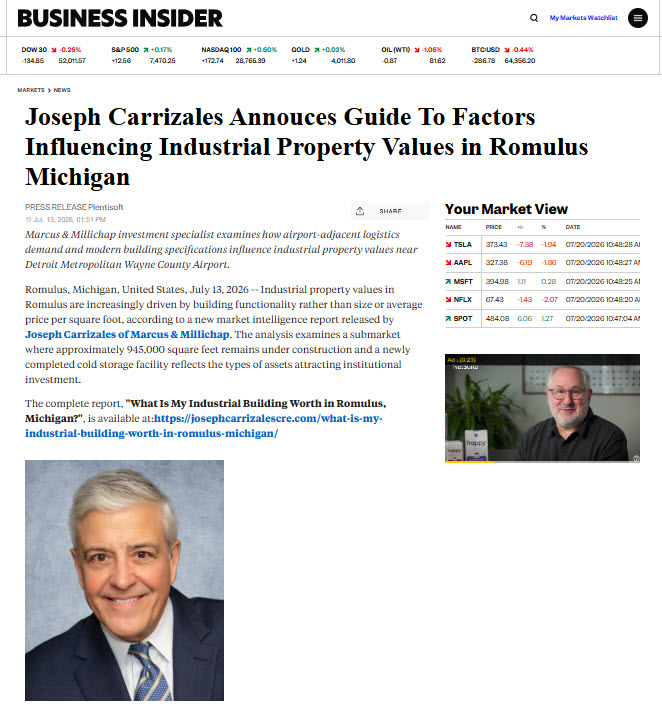
Looking to sell commercial real estate in Michigan, check out https://josephcarrizalescre.com/
IV. Negotiation and Due Diligence
4.1 Evaluating Offers
The strongest offer is the one that combines the best price with the highest probability of closing on schedule. These elements are worth weighing together:
- Earnest money. The amount, and when it becomes non-refundable. A deposit that goes hard after a defined inspection period signals substantial commitment.
- Contingency periods. Shorter diligence windows shorten your path to certainty. It’s worth reading extension provisions closely so the full potential timeline is clear from the start.
- Financing. All-cash offers close with the fewest variables. For financed offers, the useful questions are whether the lender is identified, whether a term sheet exists, and whether the buyer has closed with that lender before.
- Buyer track record. What they’ve closed in the past 24 months, and how those transactions went. Brokers on both sides of prior deals are a good source of insight.
Price, certainty, and speed are all real forms of value. A $9.6M offer from an established all-cash buyer with a 21-day diligence period may well serve you better than a $10M offer with financing contingencies and a longer path — and comparing them on all three dimensions is how you find out.
4.2 The Due Diligence Process
What buyers review: financials against source documents, leases and amendments, physical condition, environmental reports, title and survey, zoning and permits, service contracts, insurance loss history, and any litigation.
Assemble your data room before going under contract. This is one of the most valuable things you can do, and it costs only preparation time. A complete, well-indexed data room delivered on day one compresses the diligence timeline, reduces back-and-forth, and demonstrates that the property has been managed and documented carefully. Organize it in clear folders: Financials, Leases, Property Condition, Environmental, Title & Survey, Zoning & Permits, Contracts, and Insurance.
Items that benefit from early attention. Each of these is straightforward when addressed in advance:
| Item | Preparation |
| Environmental history | Order your own Phase I before listing |
| Rent roll reconciliation | Complete the lease audit from Section 1.4 |
| Title and easements | Pull a preliminary title report early |
| Tenant estoppels | Contact tenants ahead of contract |
| Valuation support | Provide the appraiser your comparables and offering memorandum |
| Property condition | Document it and reflect it in pricing from the outset |
The pattern across all of them is the same: information you bring forward is information you control.
4.3 The Purchase and Sale Agreement
Your attorney will draft and negotiate this document. Understanding its principal provisions lets you participate in those decisions well.
Provisions worth knowing:
- Diligence period and termination rights — the conditions under which the buyer may terminate and recover the deposit
- Deposit structure — amount, timing of when it becomes non-refundable, and treatment on default
- Closing conditions — what must be satisfied for the buyer’s obligation to close
- Casualty and condemnation — allocation of risk between signing and closing
- Assignment rights — whether and to whom the contract may be assigned
- Default remedies — specific performance compared with liquidated damages
Representations and warranties. Customary seller representations include authority to sell, absence of undisclosed litigation, accuracy of the rent roll, absence of undisclosed environmental conditions, and disclosure of service contracts. Survival period (commonly three to twelve months), liability caps, and minimum claim thresholds are all negotiable. Disclosure schedules exist precisely so that anything outside your direct knowledge can be handled transparently rather than represented.
Post-closing obligations. Survival periods, indemnities, any holdback or escrow, and transition cooperation. Knowing the scope of these before closing makes the post-closing period straightforward.
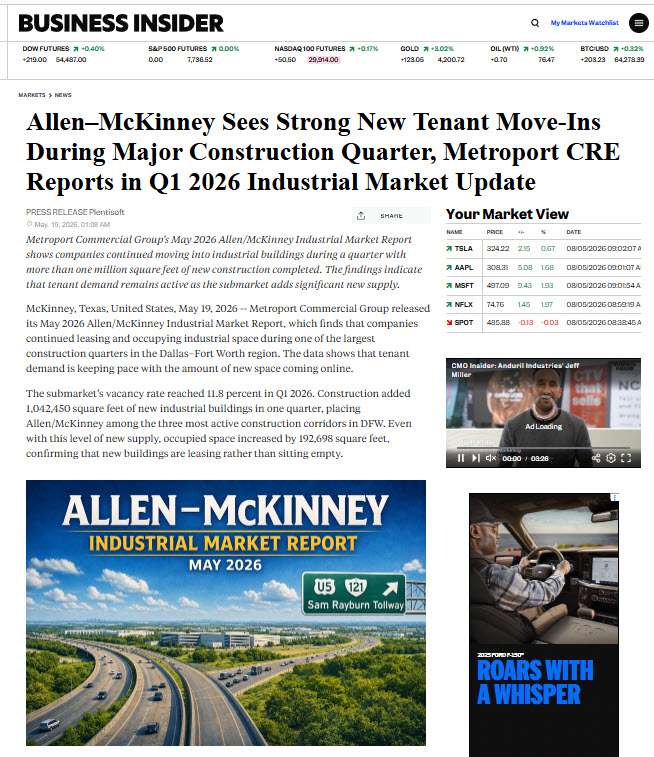
Selling Commercial Real Estate in the Dallas CRE market, contact Brent Pennington at https://metroportcre.com/
V. Closing and Post-Closing
5.1 Closing Checklist
Title commitment and survey. Review every exception. Easements, encroachments, restrictive covenants, and previously satisfied mortgages awaiting release all appear here, and each takes time to clear which is why an early review is valuable.
Prorations and closing statement. Rent, CAM, taxes, insurance, utilities, and security deposits. Reconciling the settlement statement line by line before signing is standard practice and well worth the hour.
Estoppel certificates. Each tenant confirms lease terms, rent, deposit, and the absence of defaults. Lenders require them and buyers rely on them. Beginning the process early accommodates tenant response times comfortably.
Final walkthrough. Confirm condition, completion of agreed repairs, the state of any vacated space, and transfer of all keys, codes, and access credentials.
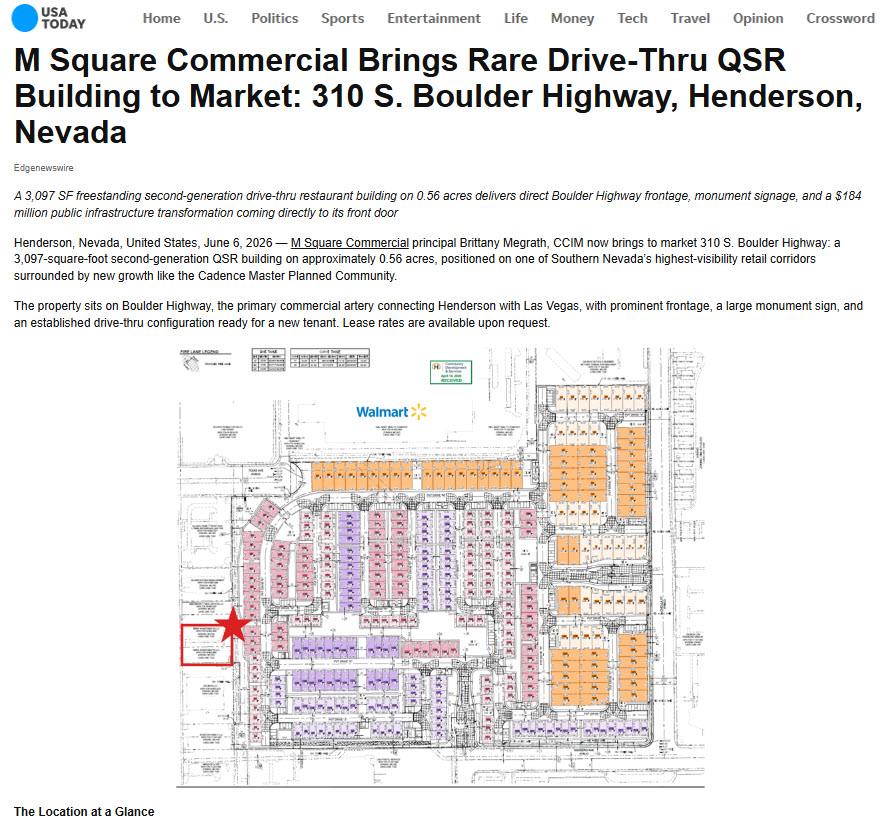
Need a BOV to Sell Commercial Real Estate Retail Properties, click here https://brokeropinionofvalue.com/retail-property-value/
5.2 Post-Closing Considerations
1031 exchange. The timeline begins at closing: 45 days to identify replacement property and 180 days to close. Your qualified intermediary holds the proceeds throughout. Identifying more properties than you intend to acquire, within the three-property rule, preserves flexibility at no cost.
Tax filing. Form 8824 for a 1031 exchange, depreciation recapture reporting, installment sale reporting where applicable, and state filings, which may include non-resident withholding. A conversation with your CPA within thirty days of closing puts everything on a clear footing.
Non-compete and consulting agreements. If you’re staying on through a transition period or have agreed to any restriction within the submarket, confirm the scope and duration in writing.
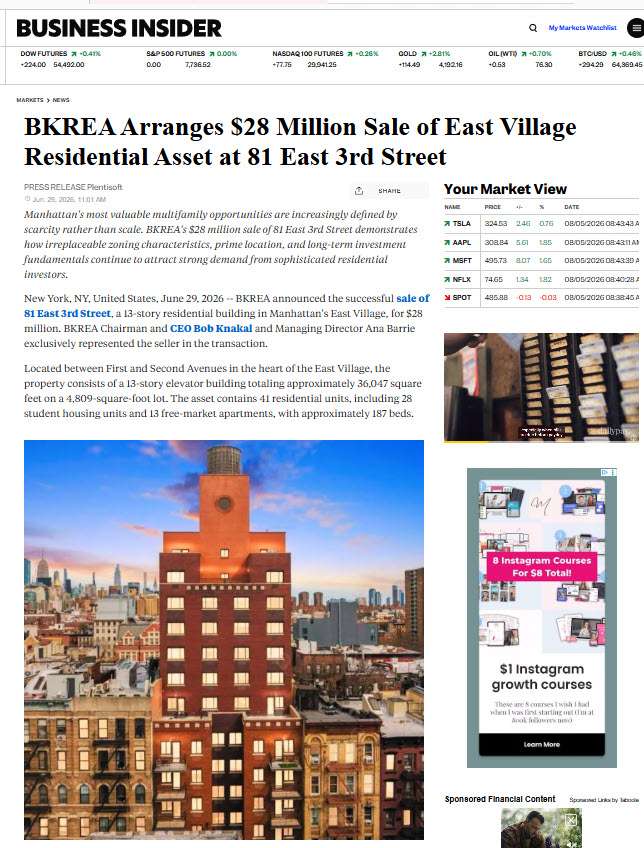
No one has sold more commercial real estae than Bob Knakal. See hundreds of his success stories in NYC at https://www.bkrea.com/success-stories
The Seller’s Checklist
Use this as your step-by-step timeline.
| ☐ | Task | Phase |
| ☐ | Interview and retain a commercial broker | Pre-Listing |
| ☐ | Engage real estate attorney and CPA | Pre-Listing |
| ☐ | Order a Broker Opinion of Value | Pre-Listing |
| ☐ | Complete property audit: physical, environmental, zoning | Pre-Listing |
| ☐ | Gather 3 years of financials and current rent roll | Preparation |
| ☐ | Address deferred maintenance and curb appeal | Preparation |
| ☐ | Commission professional photography, drone, and virtual tour | Preparation |
| ☐ | Review and approve the Offering Memorandum | Preparation |
| ☐ | Draft and distribute press release via CREPressreleases.com | Marketing |
| ☐ | Launch property website and digital ad campaigns | Marketing |
| ☐ | Broker executes pre-marketing to buyer database | Marketing |
| ☐ | Schedule and conduct property tours | Marketing |
| ☐ | Review all offers — evaluate price, terms, and buyer strength | Negotiation |
| ☐ | Open data room for buyer due diligence | Negotiation |
| ☐ | Negotiate and execute Purchase and Sale Agreement | Negotiation |
| ☐ | Order title commitment and survey | Closing |
| ☐ | Obtain estoppel certificates from all tenants | Closing |
| ☐ | Review and approve closing statement | Closing |
| ☐ | Execute closing documents and wire transfer | Closing |
| ☐ | Initiate 1031 exchange identification (if applicable) | Post-Close |
| ☐ | Consult CPA on tax filing obligations | Post-Close |
Frequently Asked Questions
How long does it take to sell commercial real estate?
Typically six to twelve months from decision to closing in a normal market — roughly three to six months of marketing and 60 to 90 days from contract to close. Well-prepared assets in active submarkets often move faster; specialized or vacant properties generally take longer.
What’s the difference between a Broker Opinion of Value and an appraisal?
A BOV is a broker’s market-based estimate — fast, low cost, and reflective of current buyer appetite. An appraisal is a formal, standardized valuation by a licensed appraiser, required by lenders, courts, and tax authorities. Use a BOV to inform your pricing strategy, and an appraisal when an independent third party requires one.
Should I sell with a broker or on my own?
For properties under roughly $1M where you already have an interested buyer, a direct sale can work well. Above that, the additional exposure a broker generates and the competition that comes with it typically more than covers the commission. What the commission purchases is the buyer pool.
What documents do buyers request first?
The T-12 operating statement, two prior years, current rent roll, executed leases, property tax bills, insurance loss runs, and any environmental reports. Assembling these before listing keeps the process moving.
Should I disclose known issues with the property?
Disclosure requirements vary by state and your attorney will advise on your specific obligations. As a strategy, transparency serves you well: buyers identify material items during diligence in any case, and an item disclosed early is one that’s priced into the offer from the beginning rather than raised mid-process.
Can I complete a 1031 exchange after closing?
The exchange must be established before closing, with a qualified intermediary holding the proceeds. Once funds are received directly, the exchange is no longer available — which is why the conversation belongs at step 1.1.
Two Resources to Get Started
BrokerOpinionOfValue.com — extensive information on specific property types and use cases, and a place to begin establishing a well-supported value for your asset.
CREPressreleases.com — information and case studies on completed sales achieved through Mass Exposure, reaching the highest-paying buyers locally, regionally, and nationally.
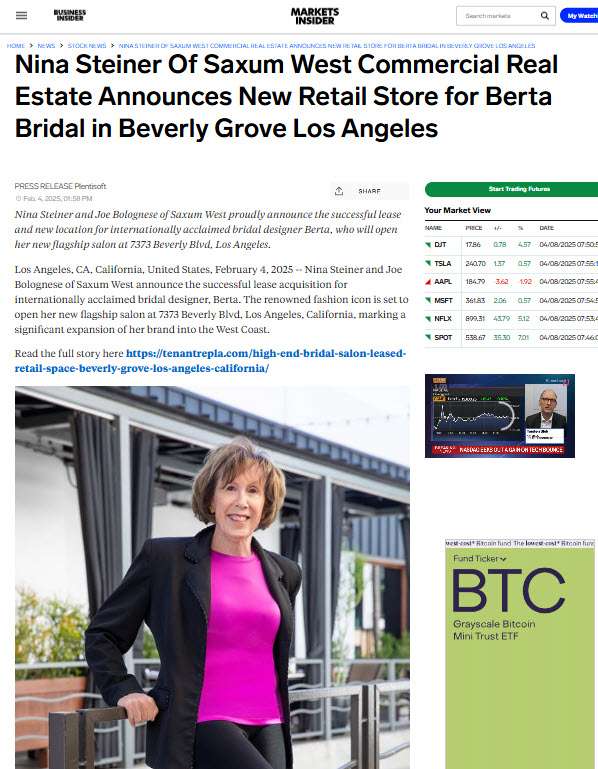
Nina Steiner has a wealth of information about the Los Angeles market at https://tenantrepla.com
About Edward Winslow
Edward J. Winslow is the creator of Proof Stacking® and founder of ProofStacking.ai. He has spent more than 30 years in commercial real estate and marketing strategy, a career running from CBRE to working alongside Bob Knakal at Massey Knakal Realty Services. That experience is why his approach to selling property begins with evidence.
He is the author of Proof Stacking and the creator of the 1-Page Case Study, a repeatable content format now used across industries. His work has been featured in The New York Times, Business Insider, and across the Google News network. He is based in Wilton, CT, and works with clients in New York City and nationwide.
You can find me at LinkedIn via https://www.linkedin.com/in/edwardwinslow/